
You were told to cut back on protein. So you did. Maybe you swapped your morning eggs for plain toast. Maybe you started picking at dinner because you weren’t sure how much was “too much.” And now you’re noticing something you didn’t expect. Getting up from a chair takes a little more effort. The grocery bags feel heavier. You’re more tired than you used to be.
“Am I protecting my kidneys… or hurting the rest of my body?”
Protecting your kidneys should not cost you your strength. Your muscles help you stay independent, keep your balance, and keep doing the things you love, like walks around the neighborhood, time in the garden, or keeping up with the grandkids.
As a renal dietitian, I help people find the balance between eating for their kidneys and eating for their muscles. It’s not about eating less. It’s about eating smarter. Let’s walk through why muscle loss happens with kidney disease, how much protein you really need, and the practical food tips I use with my clients every day.
Table of Contents
Why Muscle Loss Happens With Kidney Disease
Muscle loss is common with chronic kidney disease. And it’s not your fault.
When kidney function goes down, a few things happen in the body that make it harder to hold on to muscle. (1)
Inflammation Goes Up
Kidney disease raises inflammation in the body. Over time, that ongoing inflammation can slowly break down muscle.
Acid Builds Up in the Blood
When your kidneys can’t clear acid as well, it builds up in your blood. This is called metabolic acidosis, and it signals your body to break down muscle.
Insulin Doesn’t Work as Well
CKD can make your body less responsive to insulin. That makes it harder for your muscles to take in and use fuel.
Your Appetite Drops
Many people with CKD notice they just aren’t as hungry. Eating less, often without realizing it, means your muscles get fewer of the calories and protein they need.
You Move Less
Feeling tired can make it harder to stay active. And muscles that aren’t used tend to shrink.
What This Can Lead To
When these add up, it can lead to something called protein-energy wasting.
That’s a fancy way of saying the body is losing protein and energy stores faster than it can rebuild them. It affects about 11% to 54% of people with CKD stages 2 to 5. (1)
You may also hear the word sarcopenia. This means losing muscle size and strength.
In people with CKD, it’s linked to a higher risk of heart problems and other health concerns. (2)
The good news? Many of these drivers are things nutrition can help with.
How Much Protein Do You Need With CKD?
There’s no one-size-fits-all protein number. Your goal depends on your stage of CKD, whether you’re on dialysis, your age, and how your muscles are doing.
Here’s a general look at what current guidelines suggest:
| Who | Daily protein goal (grams per kg of body weight) | Example for a 150-lb (68 kg) person |
|---|---|---|
| Stages 3 to 5, not on dialysis | About 0.8 g/kg (3) | About 54 grams |
| Stages 3 to 5, lower-protein plan guided by a renal dietitian | 0.55 to 0.6 g/kg (4) | About 37 to 41 grams |
| Older adults at risk of muscle loss | 1.0 to 1.3 g/kg (5) | About 68 to 88 grams |
| On dialysis | 1.0 to 1.2 g/kg (1) | About 68 to 82 grams |
No matter your stage, most people with CKD should stay under 1.3 g/kg. Very high protein intake can speed up the loss of kidney function. (3, 6)
Some people use an even lower-protein plan paired with a prescribed medical food called ketoanalogues.
This should only be done with close guidance from a renal dietitian. Learn more about ketoanalogues here.
Why Older Adults May Need a Little More
For years, the message was simple: eat less protein to protect your kidneys. Newer research is adding some important nuance.
A 2026 expert consensus on frailty in CKD suggests that older adults who are losing muscle may do better with a bit more protein, around 1.0 to 1.3 g/kg.
It also notes that eating more than 0.8 g/kg has been linked to living longer, without a higher risk of needing dialysis. (5)
In other words, the right number for you depends on which risk is bigger right now: your kidneys or your muscles. (6, 7)
This is exactly why working with a renal dietitian matters. Please don’t change your protein goal on your own. Bring these numbers to your next appointment and talk it through with your care team.
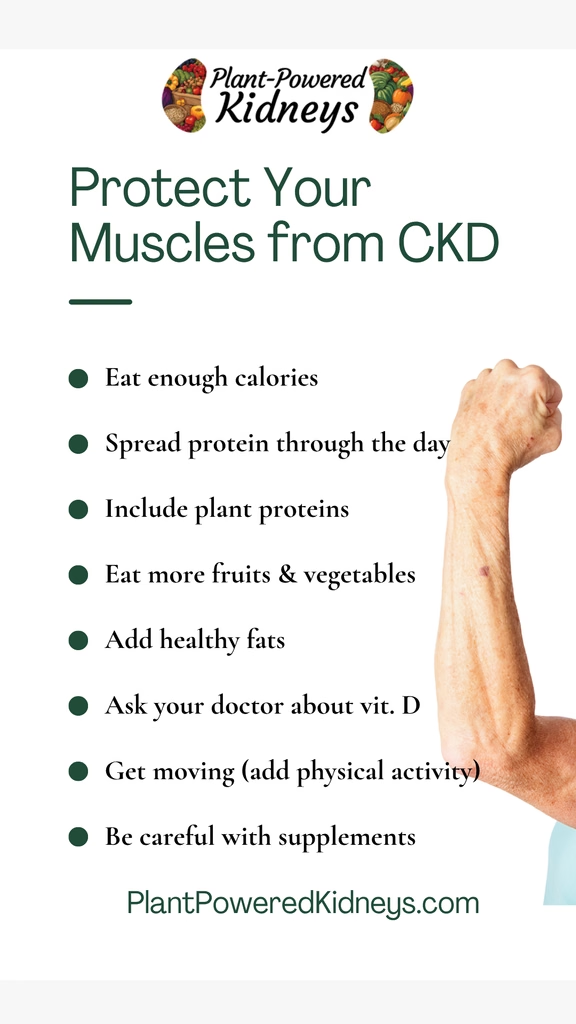
8 Renal Dietitian Tips to Protect Your Muscles With CKD
Protein is only one piece of the puzzle. Here’s what I focus on with clients who want to protect their kidneys and their muscles at the same time.
1. Eat Enough Calories (This Is the Big One)
If you take away just one tip, make it this one.
When you don’t eat enough calories, your body looks for fuel somewhere else. One place it finds it is your muscles. That means the protein you are eating gets burned for energy instead of going toward your muscles.
Most people with CKD need about 25 to 35 calories per kg of body weight each day. (4)
For a 150-lb person, that’s roughly 1,700 to 2,400 calories. Your exact needs depend on your age, activity, and goals.
This matters even more if you’re following a medically ordered low-protein diet. Eating less protein only works when you eat enough calories. (8)
Easy ways to add kidney-friendly calories:
- Cook with heart-healthy oils like olive or avocado oil
- Add avocado, nuts, or seeds to meals (mind your portions if potassium or phosphorus runs high for you)
- Include a grain at each meal, like rice, pasta, oats, or bread
- Eat smaller meals more often if your appetite is low
If weight loss is one of your goals, talk with your renal dietitian about losing weight slowly so you keep your muscle.
2. Spread Your Protein Out Over the Day
Many people eat most of their protein at dinner. Breakfast might be toast and coffee. Lunch might be a salad with no protein at all.
Instead, try to include some protein at each meal. This makes it easier to reach your goal without going over. It also gives your muscles a steady supply of building blocks all day long.
A simple day might look like this:
- Breakfast: oatmeal made with soy milk, topped with berries and ground flaxseed
- Lunch: a whole grain wrap with hummus, cucumber, and lettuce
- Dinner: tofu stir-fry with peppers, onions, and rice
- Snack: unsalted nuts or toast with peanut butter (find more kidney-friendly snacks here)
3. Choose Quality Protein (Including Plants)
For years, people with kidney disease were told to limit plant proteins like beans and lentils because of their phosphorus and potassium. What we know now is different.
Current guidelines don’t say one type of protein is better than the other. But they do encourage including more plant-based foods. (13)
When it’s doable for you, swapping some animal protein for plant protein can be really helpful.
One easy way to start: cut your usual meat portion in half (about 2 ounces) and replace the other half with a plant protein.
Think a chicken stir-fry with half the chicken plus a scoop of edamame, or tacos made with half ground beef and half lentils.
A lot of people worry that plant proteins aren’t “complete” enough to protect their muscles. But plenty of plant foods have you covered.
- Soy foods like tofu, tempeh, edamame, and soy milk have all the essential amino acids.
- Beans, lentils, and peas eaten with whole grains over the day work together to cover your needs.
- Eggs and dairy, if you enjoy them, are great options, too. (Here’s more on eating eggs with kidney disease.)
Plant proteins also bring some bonuses for your kidneys.
Your body absorbs less of the phosphorus in plant foods than the phosphorus in meat or processed foods.
And plants come packed with fiber.
You don’t have to be 100% plant-based. It’s not about restriction; it’s about addition.
Adding more plant proteins alongside what you already eat is a great place to start, and our guide to a plant-based diet for kidney disease shows you how.
4. Fill Half Your Plate With Fruits and Vegetables
Remember that acid buildup we talked about? It’s one of the drivers of muscle breakdown with CKD. (9)
Foods like meat, cheese, and grains tend to add acid. Most fruits and vegetables help balance it out.
That doesn’t mean you have to give up chicken. Chicken breast on its own is acid-producing. But enjoy it with broccoli and a baked potato, and the whole meal becomes acid-reducing.
Try our PRAL calculator to see how your meals add up.
If your labs show a low CO2 or bicarbonate level, ask your physician about it. That’s the lab on your renal function panel that tells you about acid in your blood.
What about Potassium?
If your potassium is in a healthy range, there’s often no reason to cut back on fruits and vegetables.
If it runs high, a renal dietitian can help you choose and prepare them in a way that works for you. Our low-potassium diet guide is a great place to start.
5. Add Foods That Calm Inflammation
Inflammation is another reason muscles break down with CKD. No single food fixes that, but an eating pattern rich in plants can help. (9)
Omega-3 fats are one example. Research suggests they may help muscles respond better to exercise, though results are mixed. (10, 11)
Food sources of omega-3s include:
- Ground flaxseed and chia seeds
- Walnuts
- Canola and soybean oil
- Fatty fish like salmon (if you eat fish)
I always suggest food first. Talk with your care team before starting a fish oil or omega-3 supplement, especially if you take a blood thinner.
6. Ask About Your Vitamin D
Vitamin D helps support both your muscles and your bones. Your kidneys help turn vitamin D into its active form, so levels are often low with CKD. (1, 9)
Ask your physician to check your vitamin D at your next lab draw. If it’s low, they may recommend a supplement at a specific dose. You can learn more in our article on vitamin D and kidney health.
But more isn’t always better. Vitamin D is a fat-soluble vitamin, which means extra can build up in your body. Stick to the dose your care team recommends.
7. Pair Your Protein With Movement
Here’s something that surprises a lot of people: food alone usually isn’t enough to rebuild muscle.
The best results come from pairing good nutrition with resistance exercise, like strength training. (1, 5)
Resistance exercise means working your muscles against some kind of weight. That could be:
- Resistance bands
- Light hand weights
- Bodyweight moves like standing up from a chair or wall push-ups
Strength training can improve strength, physical function, and quality of life for people with CKD. (1)
A few food tips to go with it:
- Plan your workouts near a meal or snack that includes protein.
- Stay hydrated (within any fluid limits you’ve been given).
- Check with your physician before starting a new exercise routine.
One more tip: hard workouts can raise your creatinine for a day or two. Try to take it easy 1 to 2 days before a lab draw so your results reflect your kidneys, not your workout.
8. Be Careful With Muscle-Building Supplements
Walk down any supplement aisle and you’ll see protein powders, amino acids, and products promising to build muscle.
Some, like HMB and essential amino acids, show promise in older adults. But there’s very little research on them in people with CKD. (11, 12)
Here’s what to keep in mind:
- Protein powders count toward your protein goal. It’s easy to go over without realizing it.
- Some products have added potassium or phosphorus. Always read the label.
- More isn’t always better. Quick-fix supplements can do more harm than good with kidney disease.
If your appetite is low and you’re losing weight, a nutrition shake may help in some cases. Shakes that combine carbs, protein, and fat seem to work better than protein alone. (1, 2)
Your renal dietitian can help you pick one that fits your labs. For product ideas, see our guide to protein supplements.
What About Creatine and Kidney Disease?
Creatine is one of the most popular muscle-building supplements out there. Your body makes some on its own, and you also get it from foods like meat and fish.
So is creatine safe for kidneys? So far, research hasn’t shown that creatine harms kidney function. (14, 15)
In people on hemodialysis, small studies found creatine helped them hold on to muscle and move around more easily. (17, 18)
But there’s very little research in earlier stages of CKD, and no long-term studies yet. (16)
There’s also a lab catch. Creatinine is what’s left over after your body uses creatine, so taking creatine makes your creatinine go up. That doesn’t mean your kidneys got worse, but it can make your eGFR look lower than it really is. (15)
If you’re curious about creatine:
- Talk with your nephrologist and renal dietitian before you start.
- Ask whether a cystatin C test makes sense, so your kidney function can be tracked without creatinine getting in the way.
- Remember that creatine works best alongside strength training, not instead of it. (1)
Signs Your Muscles May Need More Support
Muscle loss can sneak up on you. Keep an eye out for these signs:
- You’re losing weight without trying
- Your clothes or rings fit looser
- Your appetite has been low for weeks
- Getting up from a chair or climbing stairs feels harder
- Opening jars or carrying groceries takes more effort
- You feel tired or weak more often
If any of these sound familiar, bring them up at your next appointment. Your care team can check your nutrition status and adjust your plan before small changes turn into big ones. (5, 6)
Frequently Asked Questions
Should I stop eating protein to protect my kidneys?
No. Your body needs protein to keep your muscles, immune system, and blood healthy. Eating too little can lead to muscle loss. The goal is finding the right amount for you, not cutting it out.
Is plant protein better for my kidneys than animal protein?
Plant proteins come with fiber, a lower acid load, and phosphorus your body absorbs less of. That makes them a great fit for kidney health.
You don’t have to be fully plant-based, but adding more plant proteins can support both your kidneys and your muscles.
Can I keep my muscle on a lower-protein diet?
Yes, it’s possible when you eat enough calories, choose quality protein, and stay active with strength training. (1, 8) This is where guidance from a renal dietitian makes a big difference.
Do protein shakes help with muscle loss in CKD?
Sometimes. If you’re struggling to eat enough, a shake can help fill the gap.
Look for one with carbs, fat, and protein, and check the label for added potassium and phosphorus. Remember, it counts toward your daily protein goal.
Is creatine safe to take with kidney disease?
Creatine is a popular supplement for building muscle. (It’s not the same as creatinine, the lab on your kidney panel, but the two are connected.) So far, research hasn’t shown that creatine harms kidney function. (14, 15)
But most of the promising muscle results come from people on dialysis, and there’s very little long-term research in earlier stages of CKD. (16)
Creatine raises your creatinine level. That can make your eGFR look worse even when your kidneys haven’t changed. (15)
If you’re thinking about trying creatine, talk with your nephrologist and renal dietitian first. They’ll know how to read your labs, and they may track your kidney function with a different test, like cystatin C.
How do I know how much protein I’m eating now?
A food journal is the best way to find out. Track a couple of normal days, including portion sizes.
Many people are surprised to learn they’re eating far fewer calories, and a different amount of protein, than they thought.
How to use a food journal with CKD.
Protecting Your Kidneys and Your Strength
Protecting your kidneys and protecting your muscles don’t have to compete. When you eat enough calories, find your protein sweet spot, fill your plate with plants, and keep your body moving, you give yourself the best chance to stay strong and independent.
While learning is important, it’s what we do with that information that truly matters. And the first step is knowing where you’re starting. How much protein are you really eating? Are you getting enough calories? A food journal answers both.
In my free Unlocking Kidney Nutrition masterclass, I’ll show you how to track what you eat in a way that actually supports your kidney health. That way, you can walk into your next appointment with real answers instead of guesses.
Save your spot in the free masterclass.


Jen Hernandez is a registered dietitian, board-certified specialist in renal nutrition, and author of Plant-Powered Kidney Nutrition: Proven Methods and Easy Recipes to Support Your Kidney Health (available on Amazon). She has nearly a decade of experience with kidney disease patients in all stages - from stage 1 through kidney transplant. Jen writes on the blog of Plant-Powered Kidneys to help reach and teach more kidney patients about how they can enjoy more foods in a plant-based diet while protecting kidney health.