
Holiday season gatherings are filled with tradition, family, and delicious food. If you are living with chronic kidney disease, you can absolutely enjoy holiday meals while supporting your kidney health. With simple strategies, balanced portions, and plant-forward options, you can celebrate confidently and feel your best long after the table is cleared.
This kidney-friendly holiday guide walks you through how to approach holiday meals like Thanksgiving, Christmas, and all the celebrations in between, while making kidney-friendly choices that still feel joyful and satisfying.
Table of Contents
Kidney-Friendly Eating During the Holidays
The goal during the holidays is not perfection. It is balance, enjoyment, and feeling well.
Many traditional holiday dishes can fit into a kidney-friendly lifestyle with thoughtful portions and a few nutrient-smart adjustments.
Focus on:
- Enjoying your favorite foods mindfully
- Building your plate around plants where possible
- Balancing higher-potassium foods with lower-potassium options
- Using herbs, spices, and fresh flavors to support lower-sodium eating
- Staying hydrated according to your care plan
A kidney-friendly holiday plate is delicious, festive, and nourishing.
Can Turkey Fit a Renal-Friendly Plate?
Yes, turkey can fit well into a kidney-friendly holiday meal for many individuals with CKD.
Key Points
- Turkey is naturally low in sodium when minimally processed
- A moderate portion (3–4 ounces roasted) is often appropriate
- Roasted turkey is a better choice than deep-fried
- Those with higher protein needs (such as people on dialysis) may benefit from including it
If your provider has recommended a lower-protein diet, consider enjoying a smaller portion and pairing with plant-forward sides.
Tip: When shopping, look for labels such as “no added salt” and “minimally processed.” If you are dining with family, no need to ask how it was seasoned. Enjoy your portion and balance your plate.
Plant-Forward Holiday Entrées
Holiday meals don’t need to revolve solely around turkey.
Whole-food, plant-forward entrées can bring rich flavor, beautiful presentation, and kidney-supportive nutrients, especially fiber, antioxidants, and heart-healthy fats.
These options work well if you prefer plant-based meals or if your provider has recommended moderating protein intake.
Stuffed Winter Squash
Acorn and butternut squash make a hearty, festive centerpiece. Filled with herbs, vegetables, and grains, they make a satisfying vegetarian entrée.
Squash is naturally higher in potassium, so this dish works best for those whose potassium levels are in a healthy range.
Try for inspiration: Roasted Winter Squash With Orange, Yogurt, Cinnamon & Ginger from Heidi Swanson
💡Tip: For a lighter, more customizable variation, you can serve roasted squash halves and offer grains, cranberries, herbs, and a drizzle of vinaigrette on the side so guests can build their own topping.
Roasted Portobello Mushrooms
Portobello mushroom “steaks” offer a savory, meaty texture without the saturated fat or sodium content often found in meat alternatives.
They’re naturally lower in protein, which can be beneficial for some people with CKD, and they pair beautifully with holiday herbs like rosemary and thyme.
Try for inspiration: Roasted Portobello Mushroom Packets with Garlic, Shallots & Balsamic from Nom Nom Paleo
💡Tip: Swap low-sodium coconut aminos or low-sodium soy sauce if needed, and balance with fresh herbs, olive oil, and lemon.
Stuffed Portobello Mushrooms
For a more substantial plant entrée, try stuffing portobello caps with vegetables, grains, and herbs.
This approach offers hearty texture and deep flavor without relying on processed vegan meats.
Try for inspiration: Stuffed Portobello Mushrooms with Cauliflower Rice, Crispy Tofu & Poblano Cream from The First Mess
💡Tip: Adjust fillings to renal needs by choosing lower-sodium seasoning blends and balancing plant proteins with plenty of vegetables.
Additional Whole-Food Entrée Ideas
- Herb-roasted cauliflower “steak” with lemon and garlic
- Lentil-stuffed bell peppers with herbs and roasted vegetables
- Wild-rice-and-mushroom skillet served with roasted Brussels sprouts
- Sliced roasted delicata squash with sage brown-butter–style olive oil
Each of these options brings festive holiday flavor and beautiful presentation, while keeping the focus on whole foods and plant nutrients.
About Vegan Roasts
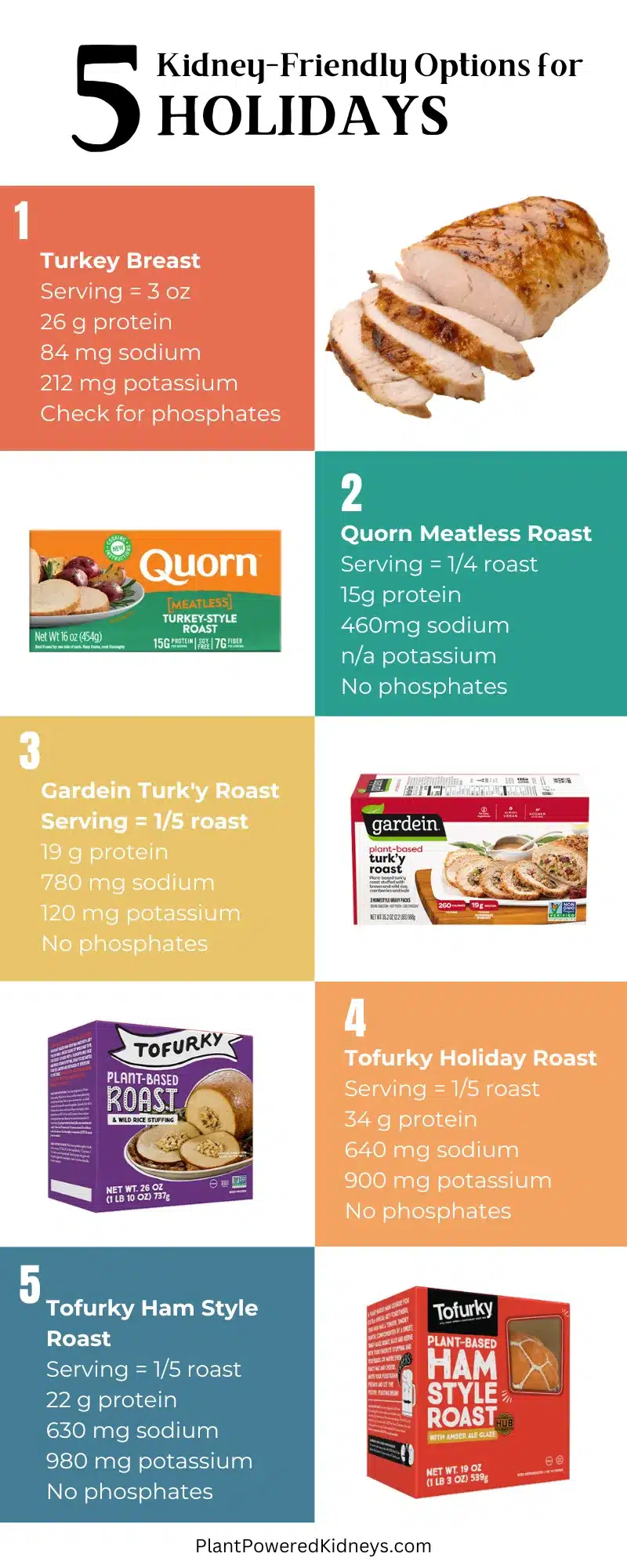
Store-bought vegan roasts can be festive but often contain more sodium and sometimes higher potassium. They fit best as occasional holiday choices and in reasonable portions.
Despite not including animal protein, vegan roasts may often be just as high or even higher in protein than turkey breast.
If choosing one, look for versions:
- Without phosphate or potassium additives if either are a concern for you
- With lower sodium
- Paired with lower-sodium sides
Whole-food plant dishes remain the most kidney-supportive routine choice.
Vegan Roast Nutrition Table
Below is a table comparing several different vegan roast options against classic options of turkey breast and ham.
| Product Name | Serving size | Protein (grams) | Sodium (milligrams) | Potassium (milligrams) | Phosphate additives? |
|---|---|---|---|---|---|
| Turkey Breast, no skin | 3 ounces (85 grams) | 26 | 84 | 212 | varies |
| Ham, roasted | 3 ounces (85 grams) | 20 | 702 | 314 | varies |
| Quorn Meatless Roast | 1/4 roast (113.5 grams) | 15 | 460 | n/a | no |
| Tofurky Holiday Roast | 1/5 roast (147 grams) | 33 | 670 | 900 | no |
| Gardein Turk’y Roast | 1/5 roast (199 grams) | 19 | 770 | 120 | no |
| Field Roast Celebration Roast | 1/8 roast (100 grams) | 22 | 670 | 210 | yes |
| Tofurky Ham Style Roast | 1/5 roast (108 grams) | 22 | 630 | 980 | no |
High- and Low-Potassium Holiday Side Dishes
Potassium needs vary among people with kidney disease. Knowing options helps you build a plate that suits your goals.
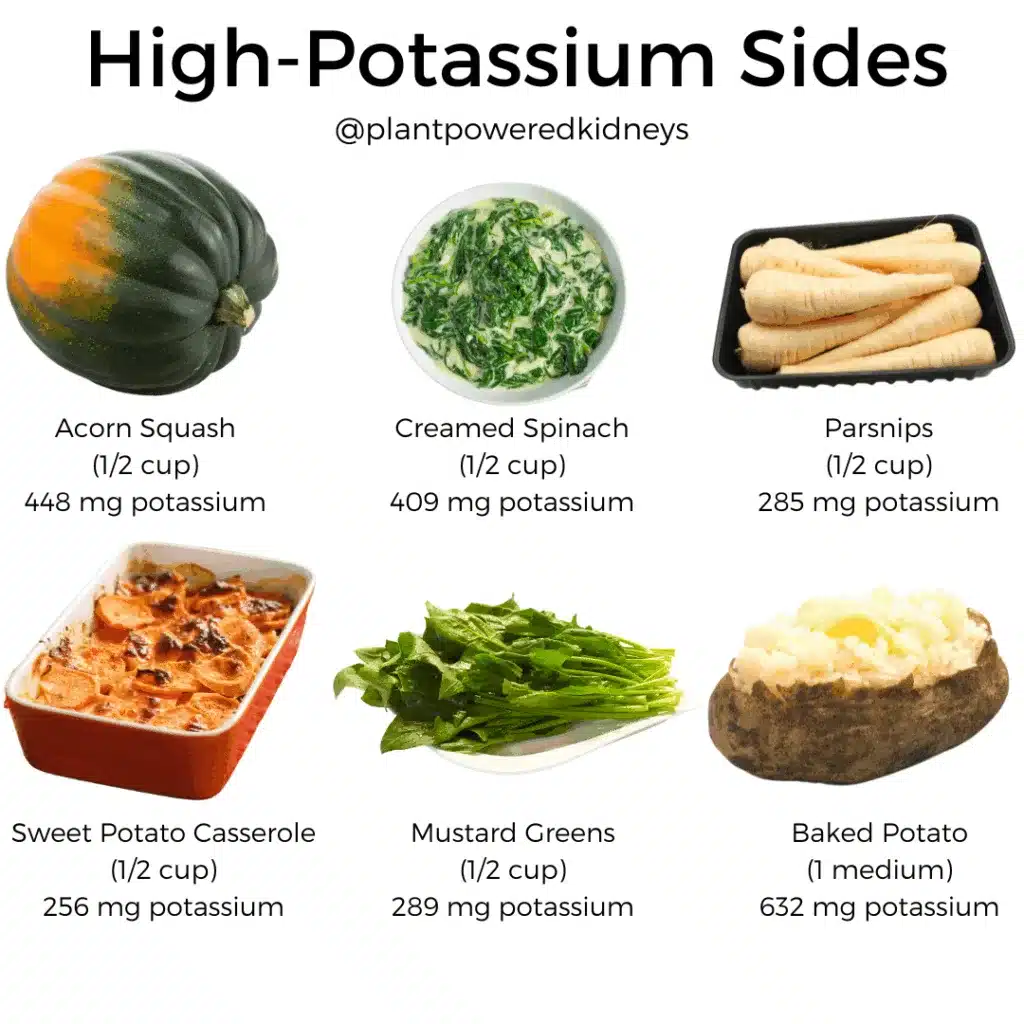
Higher-Potassium Dishes
These dishes are rich in potassium, but that doesn’t mean they must be avoided altogether. A moderate serving and pairing with lower-potassium foods can help keep your plate balanced.
- Mashed potatoes (see tips for lowering potassium here)
- Sweet potatoes or yams
- Baked or roasted butternut squash
- Acorn squash halves
- Creamed spinach
- Lentil dishes or lentil bakes
- Pumpkin-based recipes (soups, mashed pumpkin, pumpkin casseroles)
- Beet salads (small portions)
- Black-eyed peas
- Parsnips and turnips (larger servings)
Is Yam Good for Kidney Patients?
A common seasonal question is: is yam good for kidney patients?
Yes, yams can be good for people with kidney disease, depending on potassium needs.
They are nutritious and rich in fiber, but they do contain more potassium.
Yams may be a good fit if:
- Your potassium levels are in range
- You enjoy them in a moderate portion (about ½ cup)
- You balance them with lower-potassium sides
If you need to limit potassium:
- Serve a smaller portion
- Try double-boiling yams or sweet potatoes to cut potassium in half
- Enjoy with lower-potassium vegetables such as green beans or roasted carrots
This seasonal choice can be enjoyed mindfully as part of a balanced holiday plate.
Lower-Potassium Holiday Options
These options are flavorful, festive, and naturally lend themselves to holiday menus:
- Green beans or green bean casserole
- Roasted carrots with herbs
- Caramelized cabbage or sautéed red cabbage
- Roasted radishes (surprisingly mild and potato-like when cooked)
- Roasted turnips (lower potassium than potatoes)
- Sautéed zucchini or yellow squash
- Steamed or roasted broccoli
- Wild rice pilaf with cranberries and herbs
- Simple dinner rolls (very low potassium)
- Herbed couscous
- Farro salad with roasted vegetables
- Apple cranberry relish
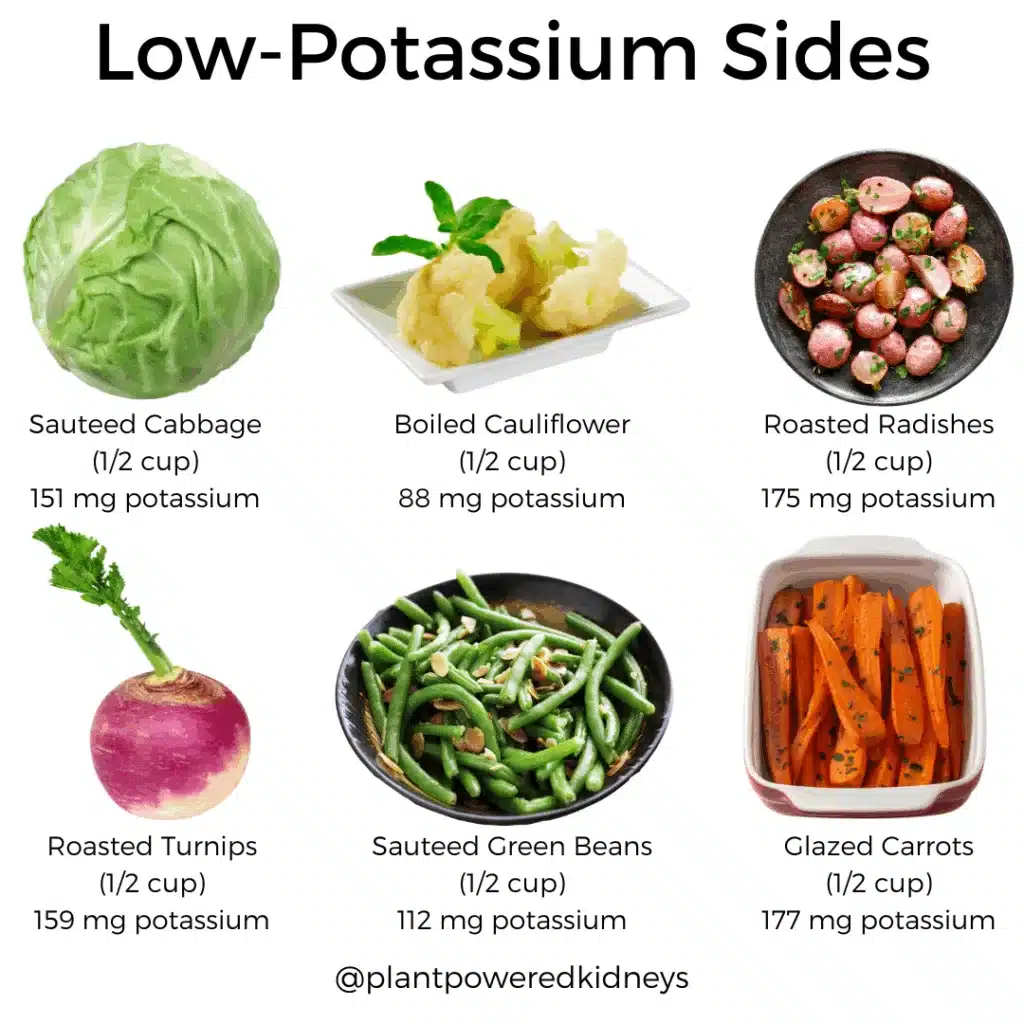
Potassium-Smart Strategies
- Mix one higher-potassium favorite with one lower-potassium vegetable
- Use double-boiling for potatoes and yams
- Use boiled cauliflower for a cauliflower mash
Ways to Keep Sodium in Check (Without Stress)
The holidays are about flavor. You can enjoy delicious meals without salt overload.
Helpful Sodium Tips
- Choose roasted or herb-seasoned turkey when possible
- Use lower-sodium broth for stuffing and gravy, if cooking
- Rinse canned vegetables or beans before using
- Taste before adding salt (holiday food is often savory enough as is)
Using plenty of fresh and dried herbs, onion, garlic, lemon, rosemary, thyme, and sage adds outstanding flavor naturally.
No need to ask your host how everything was prepared. Simply enjoy mindful portions and balance the rest of the day.
Kidney-Friendly Holiday Desserts
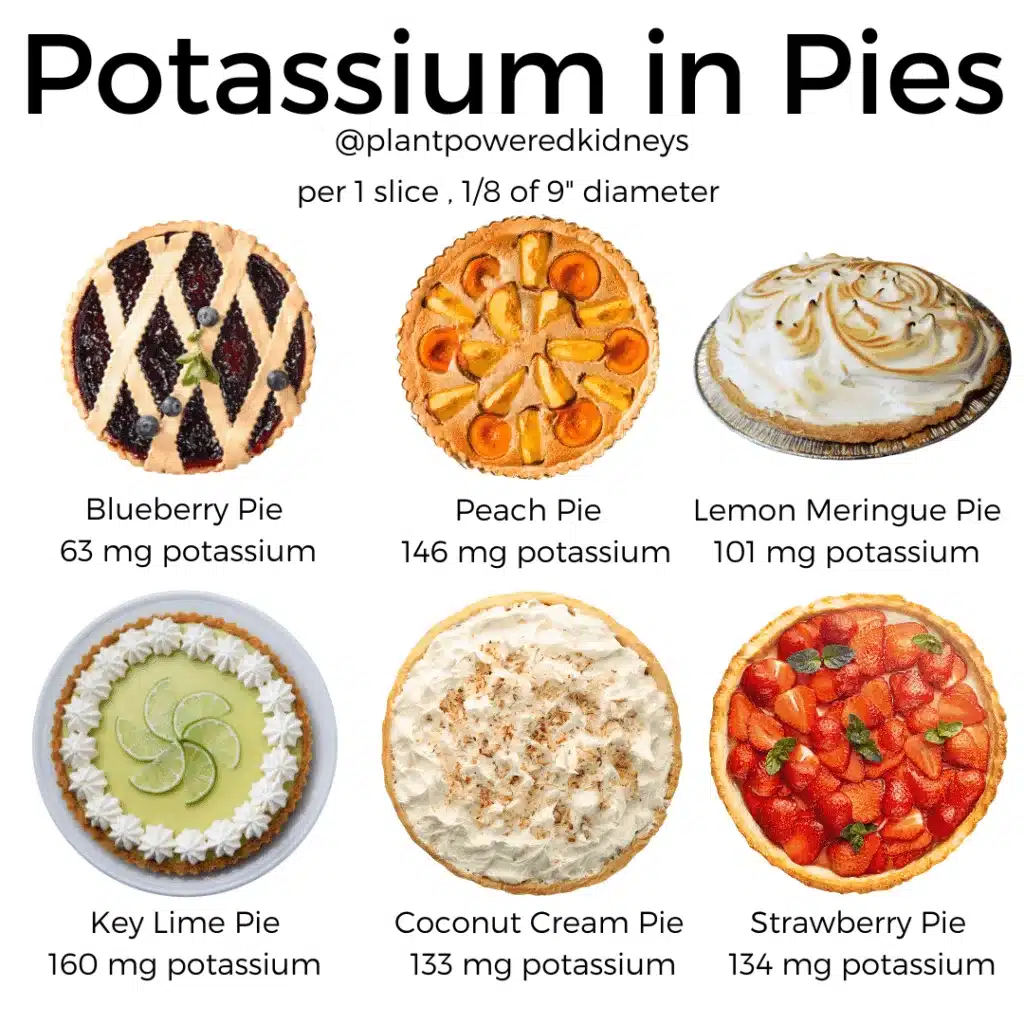
You do not need to skip dessert. Many pies can fit well into a kidney-friendly holiday meal when portioned thoughtfully.
Lower-Potassium Pie Choices
These pies are typically lower in potassium and often work well for individuals who need to be mindful of their potassium intake:
- Apple pie
- Cherry pie
- Blueberry pie
- Strawberry pie
- Peach pie
- Pecan pie
- Cranberry pie or cranberry crumble
- Key Lime pie
- Coconut Cream pie
- Pear pie or pear crisp
- Lemon Meringue
These fruits generally stay moderate in potassium per serving, especially when baked into a pie where the serving size is naturally portioned.
Higher-Potassium Pie Choices
If you’re watching potassium, you may simply want to enjoy a smaller slice of the pies below, or pair them with a lower-potassium meal earlier in the day.
These choices contain more potassium because of the main ingredient:
- Pumpkin pie
- Sweet potato pie
- Banana cream pie
- Chocolate cream pie (especially if made with bananas or large amounts of chocolate)
- Date or fig pie
- Prune pie
- Mixed-nut pies beyond pecan (such as walnut or almond-heavy fillings)
These pies can absolutely still fit into a kidney-friendly holiday with portion awareness.
Many people with kidney disease can enjoy a small slice comfortably, especially when their labs are stable and balanced with lower-potassium sides at the meal.
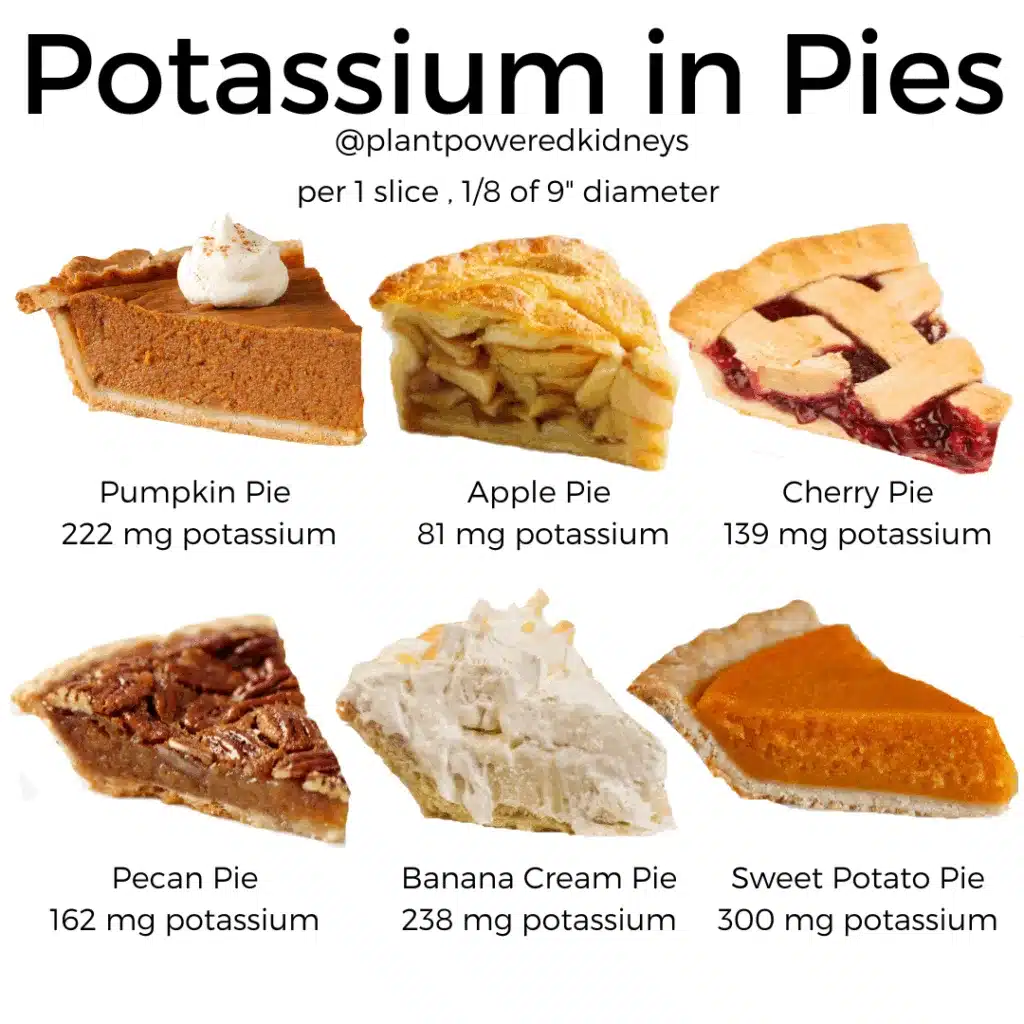
Pumpkin and sweet potato pie can fit too; simply choose a smaller slice if potassium is a concern.
Dessert Tips for Kidney Patients
Small adjustments can make dessert more kidney-friendly without sacrificing holiday joy:
- Choose fruit pies more often. Fruits like apples, cherries, and berries are naturally moderate or low in potassium.
- Enjoy a smaller slice of high-potassium pies. Even two to three bites can be enough to satisfy a holiday craving.
- Pair dessert with a lower-potassium meal earlier in the day for balance.
- Choose pies without added nuts if watching phosphorus or potassium.
- Consider homemade versions. They allow you to tailor sugar, salt, and ingredients.
Dessert isn’t something to fear. It’s something to enjoy mindfully.
Holiday Drinks, Alcohol, and Fluids for People With CKD
Holiday gatherings often include festive drinks like warming beverages, sparkling toasts, and special seasonal treats.
You can absolutely enjoy holiday beverages with CKD, but a little awareness around alcohol, fluids, sodium, and phosphorus can help you feel your best.
Your personal needs may differ depending on your kidney function, medications, and whether you follow a fluid restriction
It is important to first check with your healthcare provider or kidney dietitian before the holiday season to ensure alcohol is okay.
Holiday Beverages (Non-Alcoholic): What to Choose
Many winter beverages are festive but can be high in sugar, sodium, or potassium. Here are some kidney-conscious options.
More Kidney-Friendly Beverage Choices
- Sparkling water with cranberry or citrus
- Herbal tea (peppermint, cinnamon, ginger)
- Green or black tea (moderation if sensitive to caffeine)
- Light hot chocolate made with low-potassium milk alternative
- Apple cider (small portion of filtered cider)
Beverages to Enjoy in Smaller Portions
- Eggnog
- Hot chocolate made with whole milk
- Tomato juice or vegetable juice (very high sodium + potassium)
- Holiday punches made with 100% juice
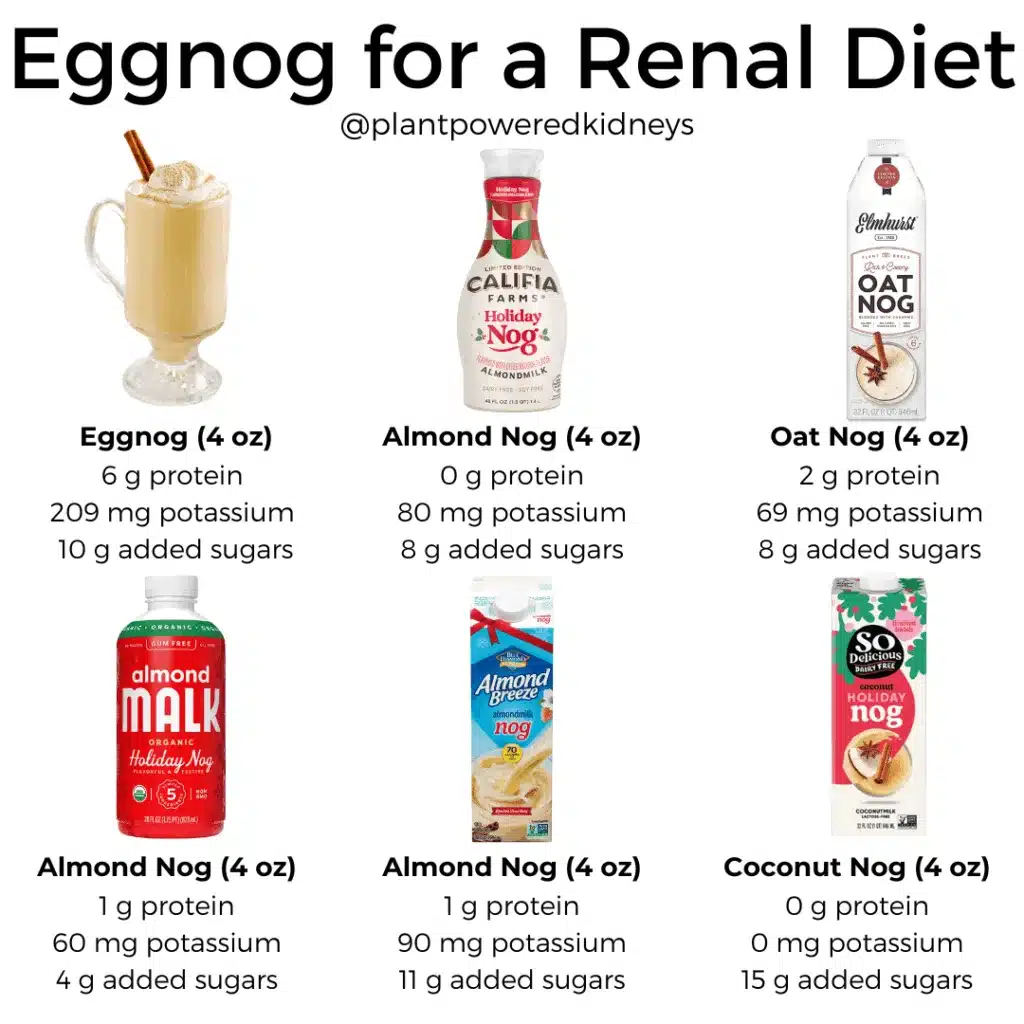
A few sips are still perfectly fine. Just balance the rest of your plate.
Alcohol Choices
Enjoy in moderation. This means typically 1 drink for women, 1–2 for men, unless your nephrologist or physician advises otherwise.
- Wine (red or white) is low in potassium and phosphorus
- Champagne or sparkling wine is good for small celebratory toasts
- Light cocktails made with:
- club soda
- sparkling water (check for phosphates)
- cranberry juice cocktail (not 100% juice)
- a splash of lemon or lime
- Vodka, tequila, or gin mixed with lemon-lime soda, ginger ale, or club soda
Alcohol to Enjoy Mindfully
These choices may contribute more phosphorus, potassium, or sodium:
- Dark sodas mixed with alcohol (may contain phosphoric acid)
- Beer, especially craft or dark beers (may contain more phosphorus)
- Bloody Marys (very high sodium and potassium due to tomato juice)
- Hard ciders (often higher in potassium)
- Cream liqueurs (may contain phosphorus + potassium additives)
Portions matter. Enjoy a small glass slowly and hydrate appropriately.
Kidney Considerations With Holiday Alcohol
Alcohol can:
- Increase thirst (important if you follow a fluid restriction)
- Raise potassium in some people
- Add to dehydration if you take certain medications
- Interfere with blood pressure control
To stay comfortable:
- Alternate alcoholic drinks with water or sparkling water
- Sip slowly instead of refilling quickly
- Avoid salty snacks that increase thirst
- Choose a single toast rather than several drinks
Read more about alcohol and kidney disease here.
Managing Fluids at Holiday Gatherings
If you’re following a fluid restriction, the holidays may feel challenging.
With a few simple strategies, you can stay within your limits and still enjoy the festivities.
Helpful Fluid Management Tips
- Use a smaller glass to help pace your drinks
- Alternate sips of flavored sparkling water with food
- Avoid high-sodium foods that cause thirst (salty appetizers, ham, pickles)
- Use lemon wedges or sugar-free mints to reduce dry mouth
- Eat ice chips or flavored ice if approved by your care team
- Bring your own kidney-friendly beverages if attending a party (it’s fairly normal to offer to bring a bottle of something to a gathering)
For more guidance and ideas, read this article.
Tips for a Balanced Holiday Plate
A helpful holiday plate might look like:
- ½ plate vegetables (mix lower- and higher-potassium options as needed)
- ¼ plate protein (turkey or plant-based option)
- ¼ plate starch (potatoes, yams, rice, rolls)
- Fresh herbs, citrus, and spices for flavor
- Water, black or green tea, or other beverage appropriate for you
This balance supports energy and comfort throughout your celebration.
Bringing It All Together: Your Kidney-Friendly Holiday Plan
Holiday meals are meant to be enjoyed, and with the right approach, they absolutely can be. Whether you’re celebrating Thanksgiving, Christmas, or any gathering in between, you now have simple strategies to help you build a balanced plate, enjoy your favorite seasonal dishes, and stay mindful of nutrients like sodium, potassium, protein, and fluids.
You don’t need perfection to support your kidney health. What matters most is balance, portion awareness, and choosing foods that help you feel your best, both during and after the celebration.
By mixing lower-potassium vegetables with your higher-potassium favorites, using herbs and spices for flavor, enjoying mindful portions of entrées and desserts, and making informed choices about drinks and fluids, you can honor your traditions and your health with confidence.
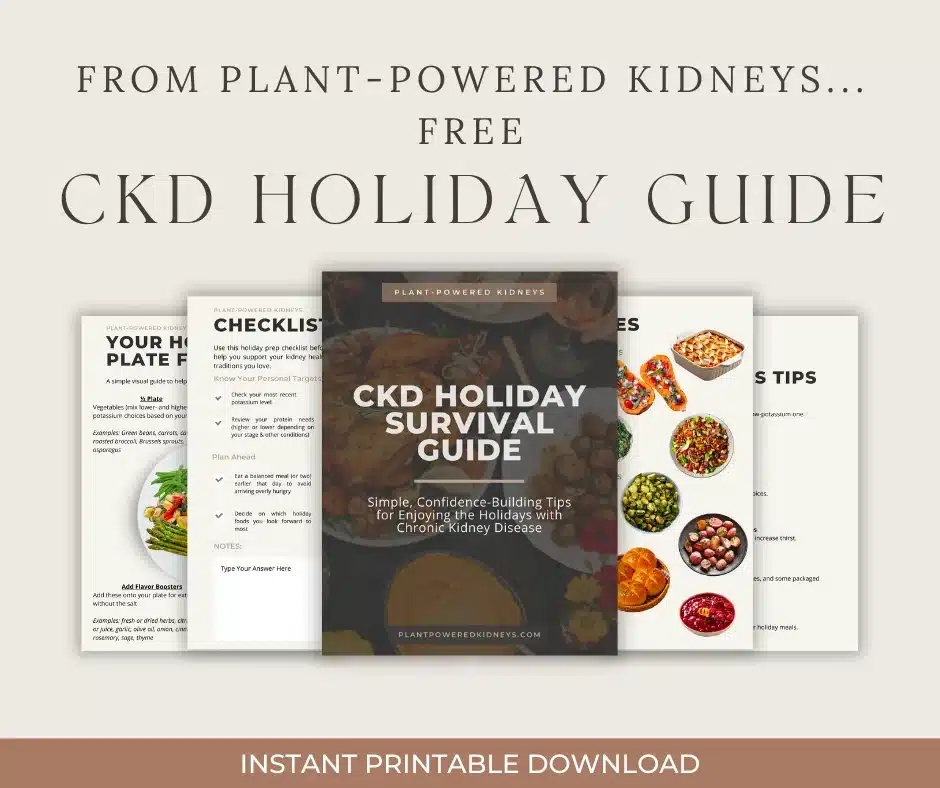
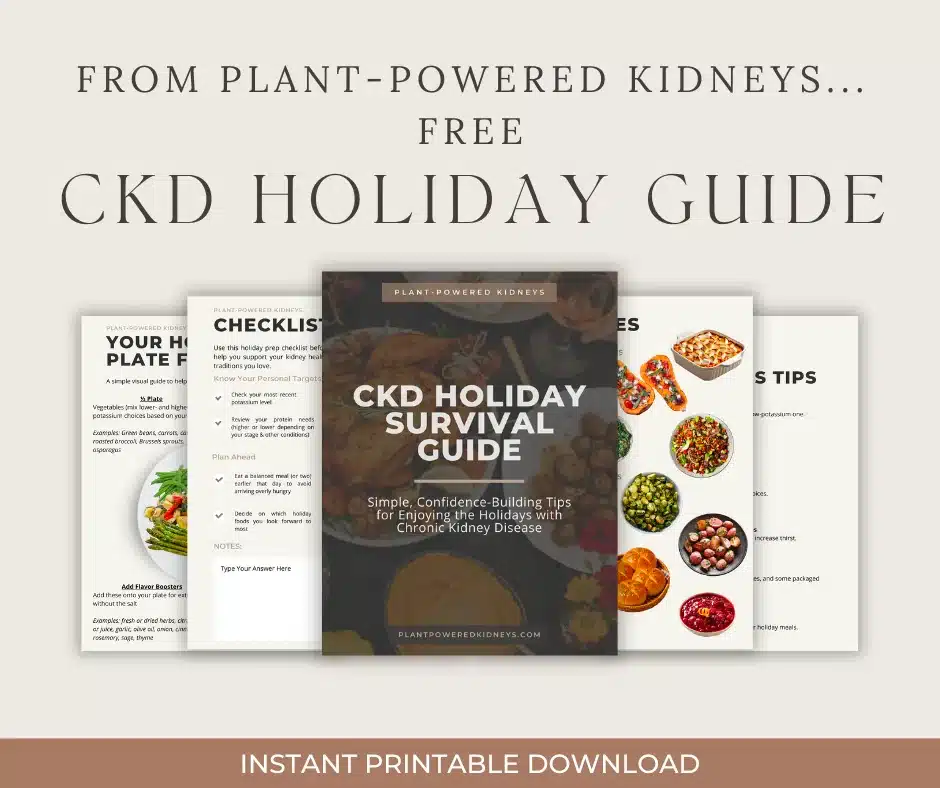
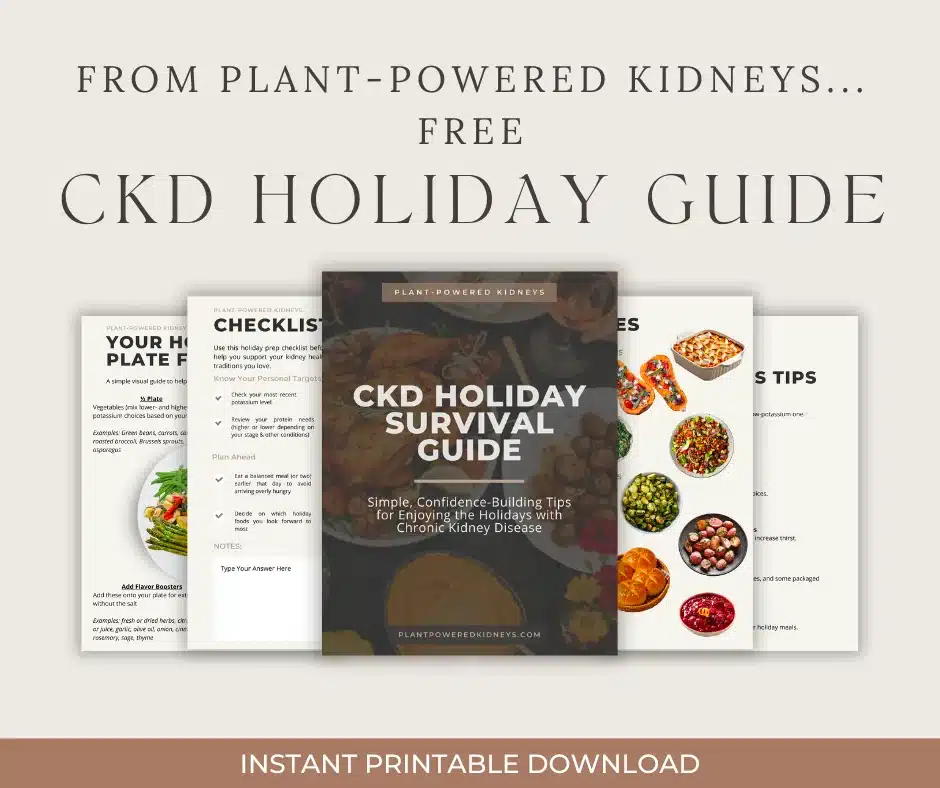
Want Extra Support This Season? Get the Free CKD Holiday Survival Workbook
To make your holiday meals even easier, I’ve created a free CKD Holiday Survival Workbook; a simple guide you can print or save to your phone for instant support.
Inside, you’ll find:
- A clear kidney-friendly holiday plate formula
- Entrée ideas (including plant-forward options)
- High- and low-potassium side dish lists
- Tips for managing sodium and phosphorus
- A holiday drinks and alcohol guide
- A bring-a-dish inspiration list
- A printable checklist to use at any gathering
This workbook is designed to help you enjoy the holiday season without stress or confusion…just confidence.
Download your free CKD Holiday Survival Workbook here
(This also gives you access to future kidney-friendly tips, recipes, and tools to support your health.)
Wishing You a Joyful, Delicious, Kidney-Friendly Holiday Season
With the right tools and guidance, you can celebrate fully, honor your health, and feel empowered in every food choice you make.
Enjoy the traditions, savor the flavors, and trust that you can create a holiday experience that supports both your kidneys and your well-being.

Jen Hernandez is a registered dietitian, board-certified specialist in renal nutrition, and author of Plant-Powered Kidney Nutrition: Proven Methods and Easy Recipes to Support Your Kidney Health (available on Amazon). She has nearly a decade of experience with kidney disease patients in all stages - from stage 1 through kidney transplant. Jen writes on the blog of Plant-Powered Kidneys to help reach and teach more kidney patients about how they can enjoy more foods in a plant-based diet while protecting kidney health.
This may work if you are the one preparing everything. But when you go to someone’s home where everyone brings a dish (which most are loaded with sodium) it is quite difficult to find anything to eat. They certainly wouldn’t eat anything kidney friendly. It is easier and less stressful for me to skip the whole thing.
You bring up a very real challenge, and I appreciate your honesty. Potluck gatherings can absolutely feel limiting when kidney-friendly options are scarce. One idea is to bring a dish you enjoy that aligns with your needs—it gives you something safe to eat and might even inspire others. Whether you join in or opt out, your well-being matters most, and we support you either way. 💚