Short answer: Yes! Kidney patients can enjoy avocado in the right portion, preparation, and context. Avocados are often flagged as “off-limits” for people with kidney disease because of their potassium content. In reality, avocado can fit into a kidney-friendly eating pattern for many people when eaten mindfully. This article will review the nutritional concerns and benefits of avocado, tips on how to enjoy avocados, and even a CKD-friendly meal plan featuring avocado.
Table of Contents
What Avocado Provides Nutritionally
Avocados are a nutrient-dense plant food with several health benefits.
- Rich in heart-healthy monounsaturated fats
- Provides fiber to support gut health and blood sugar balance
- Contains antioxidants and phytochemicals
- Naturally low in sodium
Avocado is commonly questioned in kidney disease due to its potassium content, not because it is inherently harmful.
Nutrition Facts for Avocado
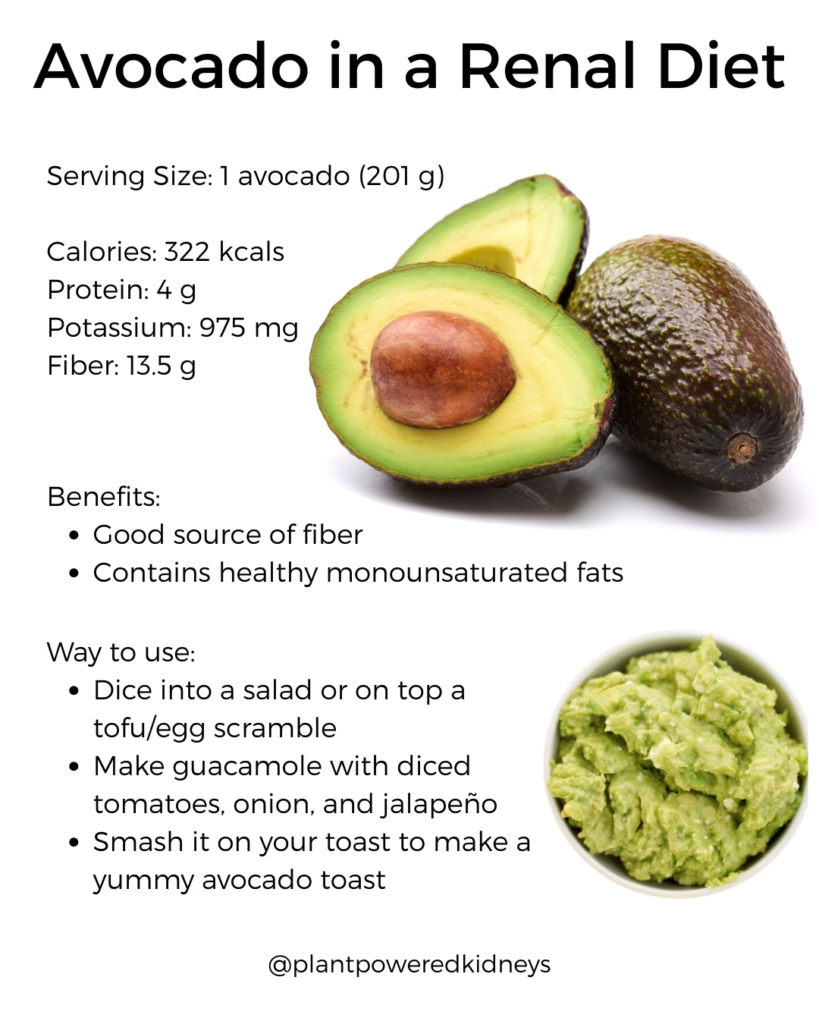
According to the USDA Food Database, one whole avocado (201g) contains;
- 322 calories
- 4 grams (g) protein
- 29 g fat
- Including 20 g monounsaturated fat
- 17 g carbohydrates
- 13 g fiber
- 975 mg potassium
However, most people do not eat a whole avocado in one sitting. Here’s a table showing nutrition fats for half of an avocado and a quarter (¼) of an avocado.
| Nutrition | Whole Avocado (201g) | Half of an Avocado (100g) | Quarter of an Avocado (50g) |
|---|---|---|---|
| Calories (kcal) | 322 | 161 | 80 |
| Protein (g) | 4 | 2 | 1 |
| Fat (g) | 29 | 15 | 7 |
| Carbohydrates (g) | 17 | 8 | 4 |
| Fiber (g) | 13 | 6 | 3 |
| Potassium (mg) | 975 | 488 | 244 |
Key Kidney-Related Nutrients to Consider
Potassium
Avocado is considered a high-potassium food.
One avocado provides about 20% of the recommended daily intake for potassium.
Eating potassium-rich foods does not automatically cause high blood potassium.
Blood potassium levels are influenced by kidney function, medications, acid-base balance, and overall diet quality.
Monounsaturated Fats
Avocados are considered a good source of monounsaturated fatty acids, or MUFAs.
MUFAs have several researched health benefits that are also great for people with kidney disease.
Diets high in MUFAs can improve cardiovascular risk factors.
These healthy fats do this by helping to lower LDL cholesterol (the bad cholesterol) and maintaining or increasing HDL cholesterol (the good cholesterol).
Fiber
Most people do not reach the recommended daily fiber goal of 25 grams per day for women and 38 grams per day for men.
Just one-quarter of an avocado will provide 3 grams of fiber.
That’s 10% of your daily fiber goal for the day… from just one food.
Fiber is incredibly important for many reasons, including supporting blood sugar, blood pressure, gut health and may even lower uremic toxins.
Phosphorus
The phosphorus found in fruits and vegetables, including avocado, is not a concern.
This type of phosphorus is known as organic phosphorus and is not well-absorbed into the bloodstream.
Is Avocado Safe for Kidney Disease?
For many people with chronic kidney disease (especially those in earlier stages like stage 3) avocado can be included in moderation.
Avocado is not automatically off-limits for kidney patients.
Safety depends on potassium levels, medications, and overall dietary pattern.
One food alone does not cause kidney decline or lab changes.
Kidney nutrition recommendations should always be individualized rather than based on blanket food restrictions.
So if you ever read or hear someone stating that all kidney patients should avoid avocados… just know that it’s simply not true.
Portion Size & Frequency
Portion size is the most important consideration when including avocado.
Start with a quarter of an avocado. This will provide nutritional benefits but not be very high in potassium.
Avocado can often be enjoyed a few times per week or even daily, depending on labs.
Larger portions may be appropriate for some individuals under professional guidance.
Best Ways to Include Avocado in a Kidney-Friendly Diet
Here are some ways to include avocado in a kidney-friendly diet.
- Use as a spread instead of butter or mayonnaise to swap saturated fats for monounsaturated fats
- Add to salads, bowls, or sandwiches for a boost in healthy fats and fiber
- Pair with lower-potassium foods to balance the meal (if potassium is a concern)
- Focus on fresh avocado rather than pre-made guacamole that potentially include added sodium or potassium-based preservatives

When Avocado May Need to Be Limited or Avoided
In some situations, avocado may need to be limited or avoided.
However, it’s important to remember that no one food causes kidney disease, kidney failure, or high potassium levels.
If you are eating a lot of avocado (for example, a whole avocado a day) and your blood potassium levels become high, your medical team may advise you to cut back on how much avocado you are eating.
Some people on dialysis may need to limit their potassium intake if their blood potassium levels are high.
Even in these cases, nutrition advice and guidance is still individualized.
Free Kidney-Friendly Meal Plan With Avocado
Interested in seeing how avocado can fit into a kidney-friendly day? Grab my free 7-day kidney-friendly meal plan.
It includes a full 7 days of breakfast, lunch, dinner, and snacks. We make it easier by also providing you the grocery list for the full plan!
You’ll even get nutrition summaries by day so you can see how potassium adds up even with avocado included.
Bottom Line
Avocado is a nutritious food that many kidney patients can enjoy in small and even larger portions.
Nutritional benefits of avocado include high amounts of monounsaturated fats and fiber. Both of these nutrients support cardiovascular health, which is important for people with kidney disease.
While high in potassium, potassium-rich foods including avocado do not always need to be limited for people with CKD.
Rather than focusing on fear-based food lists, a balanced, individualized approach to kidney nutrition allows for more flexibility and better long-term adherence.
If you’re missing avocado and are nervous or concerned about adding it to your diet, speak with a renal dietitian to get individualized guidance and support,
Related Reading
Here are some other articles you may want to read up on.
- Which Oil is Best for a Kidney Patient?
- A Low Potassium Diet
- Potassium in Nuts
- A Diet for Hemodialysis Patients

Jen Hernandez is a registered dietitian, board-certified specialist in renal nutrition, and author of Plant-Powered Kidney Nutrition: Proven Methods and Easy Recipes to Support Your Kidney Health (available on Amazon). She has nearly a decade of experience with kidney disease patients in all stages - from stage 1 through kidney transplant. Jen writes on the blog of Plant-Powered Kidneys to help reach and teach more kidney patients about how they can enjoy more foods in a plant-based diet while protecting kidney health.