Has your doctor talked to you about a GLP-1 medicine for your kidney disease? Maybe you have seen ads for Ozempic, Wegovy, or Mounjaro. You might wonder if one of these could help your kidneys too. If you feel confused about GLP-1 medicines and kidney disease, you are not alone. This is a very new topic, and doctors are still learning about it too. The food part of this topic often gets skipped. In this article, we will cover:
- What GLP-1 medicines are and why doctors use them for kidney disease
- How you can get one of these medicines
- How eating on a GLP-1 medicine and eating on a kidney diet can work together
- How to manage the digestive side effects
- What a sample day of eating might look like
This article is for learning only. It is not medical advice. Always talk to your doctor before starting or stopping any medicine.
Table of Contents
What Are GLP-1 Medicines, and Why Do Doctors Use Them for Kidney Disease?
GLP-1 stands for glucagon-like peptide-1. The medication is a GLP-1 receptor agonist, meaning it binds to where GLP-1 hormone would bind to mimic the response from the GLP-1 hormone.
GLP-1 medications include semaglutide (brand names Ozempic, Wegovy, and Rybelsus) and tirzepatide (brand names Mounjaro and Zepbound).
Doctors first used these medicines for type 2 diabetes. Later, doctors also started using them for weight loss.
Now, new research shows these medicines may also protect your kidneys. This seems to happen even when blood sugar and weight stay about the same.
The FLOW Trial
One big study is called the FLOW trial. In this study, people with type 2 diabetes and kidney disease took either semaglutide or a fake pill (called a placebo) once a week.
In this trial, semaglutide lowered the risk of major kidney problems by 24%.(1)
Major kidney problems in this study meant things like a big drop in kidney function, kidney failure, or death from kidney or heart problems.
More Research
The FLOW trial was not the only one. In 2026, researchers combined data from three large studies, called SELECT, FLOW, and SOUL. Together, these studies included more than 30,000 people.
Semaglutide lowered the risk of major kidney problems by 16% in this larger group.(2) This included people who did not even have diabetes.
Another study looked at 13 different research trials, with almost 100,000 people total. GLP-1 medicines lowered kidney problems by 21%.(3)
They lowered the risk of kidney failure by 28%.(3)
This held true whether or not people were also taking another kind of kidney medicine called an SGLT2 inhibitor.
Why Might This Be Happening?
Scientists are still studying why GLP-1 medicines seem to help kidneys. But it looks like it is not just about blood sugar or weight.
Two kinds of medicines, SGLT2 inhibitors and GLP-1 medicines, may help kidneys in different ways.(4)
SGLT2 inhibitors seem to lower the pressure inside the kidney’s filters. GLP-1 medicines seem to lower swelling and protect blood vessels.
In simple words, these medicines may give your kidneys a break in two different ways at the same time.
GLP-1 Alongside Your Other Kidney Medications
If you have kidney disease, a GLP-1 medicine is rarely the only medication working to protect your kidneys.
Many people are also on a blood pressure medicine, like an ACE inhibitor or ARB, and often an SGLT2 inhibitor too.
Some people take a newer medicine called finerenone (brand name Kerendia) as well.
That might sound like a lot at once.
But current guidelines actually recommend starting more than one of these medications early, rather than adding them one at a time only when problems show up.(6)
Each one protects your kidneys through a different pathway, so they work together instead of competing with each other.
Combining medications can matter as much as any single one.
In one study, adding finerenone to an SGLT2 inhibitor lowered the amount of protein in the urine by 52% within six months, noticeably more than either medication alone.
This benefit showed up whether or not someone was also taking a GLP-1 medicine.(7)
One modeling study estimated that combining an SGLT2 inhibitor, a GLP-1 medicine, and finerenone, compared to standard care, could add several years free of major heart problems and years free of kidney disease getting worse.(8)
No large study has tested all of these medications together at once yet. Your doctor is piecing together evidence from several different studies to build your specific plan, not following one single script.
If you end up on more than one of these medications, your doctor will likely watch your potassium level and kidney function more closely, especially right after a new one gets added. That’s a normal part of the process, not a red flag.
How Do You Get a GLP-1 Medicine?
GLP-1 medicines need a prescription from a doctor. You cannot buy them over the counter.
Be careful with GLP-1 products sold online without a prescription.
These are not checked by the same safety rules as a licensed pharmacy.
This matters even more when you have kidney disease, since your kidneys already have less room for error.
Here are some simple steps:
- Talk to your doctor first. This could be your regular doctor, your heart doctor, your diabetes doctor, or your kidney doctor. They will look at your kidney stage and your health history to decide if a GLP-1 medicine is right for you.
- Ask if kidney protection is part of the reason for the medicine. Some doctors are still learning about this new research, so it is okay to ask.
- Check with your insurance. Cost and coverage can be different for everyone. Your doctor’s office or pharmacy can help you sort this out.
Food and Nutrition: How GLP-1 Medicines and the Kidney Diet Work Together
GLP-1 medicines change how much you eat. They do this by making you feel less hungry.
The kidney diet changes what you eat, based on your lab results.
Sometimes, these two things can pull in different directions.
Eating Less Can Mean Missing Protein
Feeling less hungry is normal on a GLP-1 medicine. But this can make it harder to get enough protein.
Protein is still important with Stage 3 kidney disease.
It is not about cutting protein out. It is about finding the right amount for you.
When you eat less food overall, protein is often one of the first things you may miss. This can lead to losing muscle, not just fat.
Research shows that 25 to 39% of weight lost on these medicines may be muscle, not fat.(5)
This happened in as little as 36 to 72 weeks.
For someone with kidney disease, this matters a lot, since muscle helps you stay strong and independent.
Try to eat a food with some protein at every small meal. This spreads protein out through the day instead of saving it all for one meal.
Good protein choices include tofu, tempeh, and beans or lentils in the right amount for you, along with any animal proteins already part of your plan.
Protein alone tells only part of the story. Pairing it with some light resistance movement, even a few minutes of bodyweight or seated exercises, helps your body hold onto muscle rather than just relying on food to do that work.
If you’re already underweight or your care team has flagged concerns about your nutrition status, this is a conversation to have with your doctor before starting, not after.
Don’t Forget About Fiber
Protein gets a lot of the attention with GLP-1 medicines, but fiber deserves a spot here too.
Fiber intake often falls short once appetite drops, the same as protein does.(12)
Fiber does two jobs at once.
It helps with the constipation that’s common on these medicines, and it feeds the healthy bacteria living in your gut.
That second part matters more for kidney disease than you might expect.
In one small study of people with CKD, a prebiotic fiber lowered levels of two waste products that build up when kidneys filter less well, called indoxyl sulfate and p-cresyl sulfate.(18)
It’s early research, but a promising direction.
Phosphorus and Potassium Concerns
Here’s the part that trips people up: a lot of high-fiber foods, like fruits, vegetables, whole grains, and beans, are also higher in potassium or phosphorus.
That doesn’t mean fiber is off the table.
The phosphorus naturally found in plant foods isn’t well absorbed by your body, which is different from the phosphorus added to packaged and processed foods.
Potassium is also no longer automatically eliminated from a kidney-friendly diet. A low-potassium diet is only advised under a physician or dietitian if the labs and other health conditions associated with high potassium warrant a restriction.
For that reason, guidelines no longer recommend limiting foods like fruits, vegetables, nuts, beans, seeds, and whole grains in a kidney-friendly diet.
This means you should enjoy these foods while on a GLP-1 medication with kidney disease.
Your labs still decide your specific potassium and phosphorus targets, same as everything else in this article.
For tips on adding fiber back in gradually without stirring up more GI symptoms, see Managing Digestive Side Effects of GLP-1 below.
Watch for Vitamin and Mineral Gaps
People on a GLP-1 medicine often end up eating 16 to 39% fewer calories than before, simply because cravings, hunger, and fullness all shift.(11)
That drop in food can mean a drop in nutrients too, especially once daily calories fall below about 1,200 for women or 1,800 for men.(12)
The nutrients that tend to fall short most often include iron, calcium, magnesium, zinc, vitamins A, D, E, and K, vitamins B1 and B12, and vitamin C.(12, 13)
Protein, fluids, fiber, and total calorie intake are worth watching closely too, and we’ve already covered protein and fiber above.
Ask your doctor or renal dietitian whether it’s worth checking some of these levels through bloodwork, and whether a broad multivitamin and mineral supplement fits your plan.
This is one spot where kidney disease changes the usual advice: some standard multivitamins contain vitamin A or minerals that can build up to unsafe levels when kidney function is reduced.
A general multivitamin off the shelf isn’t automatically safe here the way it might be for someone without kidney disease, so this is a decision to make together with your care team, not on your own.
What About Potassium, Phosphorus and Sodium?
Potassium, phosphorus and sodium don’t usually show up on general GLP-1 nutrition advice, but they’re some of the nutrients most CKD patients watch closest.
Here’s what the research suggests so far:
- Vomiting or diarrhea can cause real losses of potassium and sodium
- Eating less overall naturally lowers average intake of all three(14)
- Potassium and phosphorus levels may improve for some people as kidney function improves or if you eat less than you had before
- One large study found an overall lower risk of high potassium (hyperkalemia) in people taking a GLP-1 medicine, not a higher one(15)
That’s reassuring, but it doesn’t replace your labs. Keep checking in with your care team rather than assuming either direction based on this alone.
Your Labs Still Guide the Plan
A GLP-1 medicine does not change the need to follow your labs.
Your potassium, phosphorus, and sodium choices still depend on your own numbers, not on the medicine itself.
What changes is how much you eat and when.
The plan stays the same: it is not about cutting things out, it is about adding good foods in.
Even with smaller portions, you can still make each meal count.
One practical detail worth planning for: phosphate binders need to be taken with food.
If you shift to five or six smaller meals instead of three, your binder schedule and dosing likely needs to shift with it.
Talk with your physician about any binder prescriptions routinely.
This is a great one to map out with your renal dietitian rather than guess on your own.
Managing Digestive Side Effects of GLP-1
Nausea, vomiting, constipation, and diarrhea are all common with GLP-1 medicines, especially when you first start or move up in dose.
Research puts nausea around 25 to 44% of users (the most common one), vomiting around 8 to 24%, constipation around 17 to 24%, and diarrhea around 19 to 30%.(17)
Even though those numbers look high, most cases are mild rather than severe.
Nausea and Vomiting
Nausea and vomiting are usually tied to your stomach emptying more slowly than it used to, similar to a condition called gastroparesis.
This is an expected part of how the medicine works, not a sign that something has gone wrong.(12)
A few adjustments can help quite a bit:
- Eat 4 to 6 small meals or snacks spread through the day instead of three big ones
- Start with breakfast, then eat something every 3 to 4 hours. A phone reminder or a simple food log can help you stay on track
- Avoid high-fat foods, especially in the first few days after starting or increasing your dose
- Choose lean, easy-to-digest proteins at each meal
- Eat slowly, stop the moment you feel full, and stay upright for a while afterward
Since you may be eating less food overall, each bite matters more.
Try to pick foods packed with nutrients instead of foods that fill you up without giving your body much.
Constipation
Constipation often comes from a combination of eating less overall and digestion slowing down.
Fiber and fluid both help here, but each comes with its own balancing act on a kidney diet.
- Spread fiber across the day instead of loading up at one meal. Adjust the texture if it helps (chopped, cooked soft, or blended), and build the amount back up slowly
- Add water-rich foods like fruit, vegetables, yogurt, and soup to help things move along, but watch your total fluid volume. Filling up on liquid can crowd out the calories and protein you still need
For more on fiber specifically, see Don’t Forget About Fiber above.
Diarrhea
Diarrhea can show up as your body adjusts, especially early in treatment.
Mention it to your doctor if it’s frequent or doesn’t ease up, since ongoing fluid loss adds real strain to kidneys that are already working harder than normal.
The hydration tips below can help in the meantime.
Staying Hydrated
Throwing up or having loose stools can make you lose fluids fast.
This puts extra stress on kidneys that are already working harder than normal.
If you have a fluid limit, talk with a renal dietitian about how a GLP-1 medicine might change your fluid needs.
If you cannot keep fluids down, call your doctor right away.
If you take a water pill or a blood pressure medication, it’s important to talk with your doctor before your fluid intake changes much.
Both of those medications already affect your fluid balance, and a GLP-1 can add another layer on top.
When to Call Your Doctor Right Away
Most side effects ease up on their own. But a few signs mean it’s time to call your care team the same day, not wait it out:
- You can’t keep fluids down for 24 hours
- You’re urinating noticeably less than usual
- You feel dizzy or lightheaded, especially when standing up
- You’re losing weight quickly without trying
None of these mean something went wrong on your end. They just mean your body needs a check-in sooner rather than later.
A Sample Day of Eating With a GLP-1 Medicine and Kidney Disease
Since appetite is often lower on a GLP-1 medicine, this sample day uses smaller meals spread throughout the day.
Your own potassium, phosphorus, sodium, and fluid needs depend on your labs, so use this as an example, not a strict rule.
| Example of Eating for a Day on a GLP-1 with Kidney Disease |
|---|
| Breakfast: Low-fat yogurt with a few berries and a sprinkle of ground flaxseed |
| Mid-morning Snack: A hard-boiled egg with a couple whole grain crackers & canned mandarins (drained) |
| Lunch: Lentil soup with a slice of low-sodium whole grain bread |
| Mid-afternoon Snack: Hummus with cucumber slices and a few whole grain crackers |
| Dinner: Slow-cooker chicken with roasted vegetables and a small serving of quinoa |
| Evening Snack: A few unsalted macadamia nuts or a small apple with nut butter |
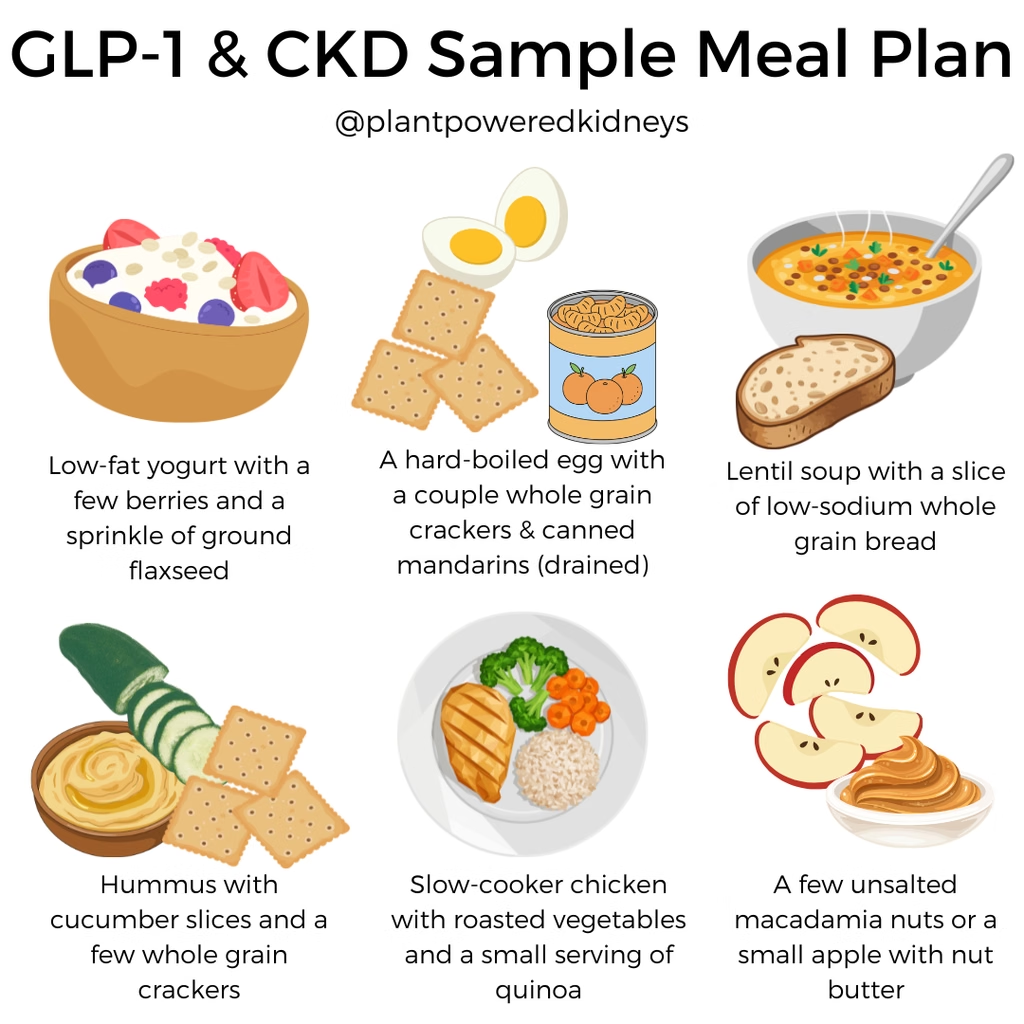
Notice that protein and fiber shows up at almost every meal and snack.
When you can only eat small amounts, spreading protein and fiber throughout the day helps your body get what it needs.
A Few Common Questions
Below are some common questions when it comes to GLP-1 medications and kidney disease.
Does a GLP-1 interact with my phosphate or potassium binders?
Not in a direct way. But when you eat your meals still matters for how well your binders work. Check the note above about binder timing.
Should I use a protein shake or supplement drink to help meet my needs?
A protein shake can help on days when you can’t eat enough food. But pick one your kidney dietitian says is safe for your labs.
Many protein shakes have a lot of potassium or phosphorus. Plan this ahead of time. Don’t just grab any shake off the shelf.
What if I’m losing weight faster than my care team expected?
This is worth a check-in, even if you don’t see any of the warning signs listed above. Losing weight fast can mean you are losing muscle, not just fat. Your kidney dietitian can help you check if you need more protein or more food.
Is intermittent fasting a good idea on top of a GLP-1?
Be careful with this combination. Don’t try it on your own. Both intermittent fasting and a GLP-1 medicine make you eat less.
Doing both at once can make it harder to get enough protein, fluids, and nutrients. There is no research yet on this exact combination. If you want to try it, talk to your kidney dietitian first.
Can I follow a keto diet while taking a GLP-1 medication?
Don’t try this combination on your own. Early research shows that a keto diet plus a GLP-1 medicine can help you lose more weight. But it can also raise your risk of some serious problems.
These include low blood sugar, more nausea and vomiting, and a problem called ketoacidosis. In one small study, everyone using both together had nausea or vomiting. No one could handle the usual dose increases.(9)
This matters even more if you also take an SGLT2 inhibitor. Mixing that medicine with a keto diet raises the risk of a serious problem called euglycemic ketoacidosis.
This means your blood has too many ketones, but your blood sugar looks normal. That makes it harder to notice.(10)
No one has studied this exact combination in people with kidney disease. No guideline recommends it either. If you want to try a low-carb diet, talk to your doctor and kidney dietitian first.
If I’m working toward a kidney transplant, does nutrition still matter alongside a GLP-1?
Yes, it still matters a lot. Some transplant programs look at your weight before they list you. But good nutrition matters more. (Even after a kidney transplant.)
This means enough protein, muscle, and overall health, not just the number on the scale. Talk to your transplant team and your kidney dietitian about this together.
Can I take a GLP-1 medication if I’m on dialysis?
This is a question for your doctor, not something to answer from an article. Only your kidney doctor (nephrologist) or whoever prescribes the medicine knows your full health picture. They can help you decide together.
Summary
GLP-1 medicines are showing real promise for protecting kidney function, and the research keeps growing. But starting one changes more than your prescription list. Your appetite drops, which means protein, fiber, and key vitamins and minerals all need extra attention.
Nausea, vomiting, constipation, and diarrhea are common too, especially early on, and each one calls for its own adjustments. None of this replaces your labs. Your potassium, phosphorus, and sodium targets still come from your own numbers, not from the medicine.
This is exactly why it takes two people on your team, not one. Your doctor manages the medicine itself, whether to start it, adjust the dose, or stop it. Your renal dietitian manages what it means for your plate: protein, fiber, hydration, and how your kidney diet shifts around the side effects. Neither one replaces the other, and you shouldn’t have to choose.
If you have Stage 3 kidney disease and want more clarity on where to focus your energy, our free webinar covers three common kidney diet mistakes.
👉 Save your spot in our free webinar, “3 Common Kidney Diet Mistakes in Stage 3 CKD”

Jen Hernandez is a registered dietitian, board-certified specialist in renal nutrition, and author of Plant-Powered Kidney Nutrition: Proven Methods and Easy Recipes to Support Your Kidney Health (available on Amazon). She has nearly a decade of experience with kidney disease patients in all stages - from stage 1 through kidney transplant. Jen writes on the blog of Plant-Powered Kidneys to help reach and teach more kidney patients about how they can enjoy more foods in a plant-based diet while protecting kidney health.