
Dialysis can feel like a full-time job. Between long treatment sessions, strict schedules, and the physical toll dialysis can take, even small comforts can make a meaningful difference.
As a registered dietitian who has worked for years inside dialysis clinics, I’ve learned a lot by listening to patients themselves. The items they rely on week after week (the ones they say they can’t live without) are often the same things they wish they had sooner.
This guide shares practical, dialysis-friendly gift ideas based on real patient experiences and clinical insight. Whether you’re shopping for a loved one or for yourself, these gifts are intended to make dialysis days more comfortable and life outside the clinic a little easier.
This article contains affiliate links. I may earn a small commission at no extra cost to you. Reminder: I only recommend products I personally use, trust, or have seen dialysis patients consistently use and appreciate.
Table of Contents
Who This Gift Guide Is For
This guide is designed specifically for:
- People receiving hemodialysis or peritoneal dialysis
- Loved ones shopping for useful, thoughtful dialysis gifts
- Dialysis patients who already have “enough stuff” but could benefit from comfort or support
- Anyone looking to make long dialysis sessions more manageable
Comfort During Dialysis Treatments
Because comfort during four-hour treatments truly matters.
Dialysis clinics are kept cool by design, and patients typically remain seated for long periods with limited movement. Comfort-focused gifts are often the most appreciated.
Dialysis-Friendly Clothing
Dialysis patients must keep their access site visible throughout treatment so nurses and technicians can monitor it safely. That makes traditional layering difficult.
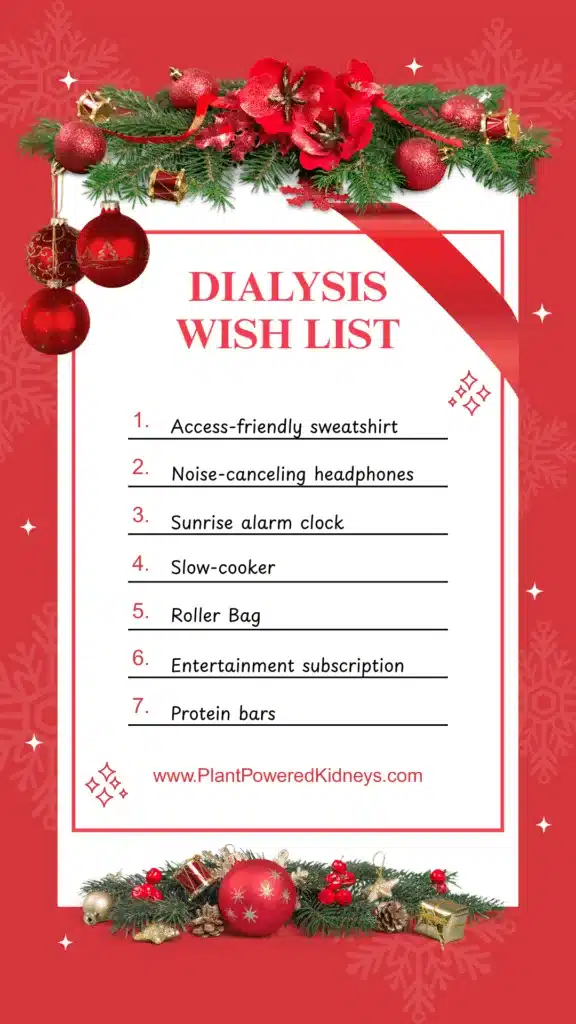
Dialysis-friendly sweatshirts and tops are designed with discreet access openings, allowing patients to stay warm without interfering with care.
These are items patients often use multiple times per week, year-round, making them especially thoughtful and practical gifts.
A Warm, Soft Blanket
Ask a dialysis patient to describe their clinic and one word almost always comes up: cold.
A soft, cozy blanket can make long treatments far more comfortable and familiar. Choose something lightweight but warm, easy to carry, and machine washable.
Important safety note: Heated blankets are generally not allowed in dialysis clinics due to outlet limitations and fire-safety concerns.
Neck Pillow for Support and Rest
Most dialysis stations include a personal television, but watching for hours, or trying to nap in a reclined chair, can strain the neck.
A supportive neck pillow allows patients to relax more comfortably while watching TV, reading, or resting during treatment.
Tablet or Smartphone Holder
During dialysis, patients are often asked to keep their access arm straight to avoid issues with blood flow. Holding a phone or tablet for hours can quickly become uncomfortable.
Hands-free holders allow patients to watch shows, read, or video-chat without straining their arms or neck- something many patients find surprisingly helpful.
Keeping Hands and Feet Warm
Because access arms must remain uncovered, hands can get cold quickly.
Mittens or finger-free hand warmers often work better than gloves, helping retain warmth without interfering with treatment. These avocado hand warmers are so cute, too!
Warm socks (men or women sizes and styles) are another simple but appreciated comfort, especially during early morning or evening dialysis sessions.
Entertainment & Tech for Long Dialysis Sessions
Because four hours is a long time… multiplied by three or even four days a week.
Most dialysis clinics offer televisions, but content options are limited. Many patients prefer to bring their own entertainment.
Tablet or E-Reader
A tablet or e-reader can serve as a central hub for entertainment during dialysis, especially when paired with downloaded content.
A thoughtful touch: preload favorite apps, books, games, or photos before gifting.
Make it even more comfortable for your reader by adding a remote page turner. (Makes reading even cosier, too!)
Noise-Canceling Headphones
Dialysis clinics can be noisy environments, with machine alarms, conversations, and staff movement throughout the room.
Over-ear, noise-canceling headphones are often more comfortable than earbuds during long sessions and allow patients to relax or nap without turning volume up excessively.
Portable Device Charger
With devices in use for many hours each week, battery life matters. Not every dialysis station has an accessible outlet.
A flat, high-capacity portable charger prevents devices from dying mid-treatment and is far more reliable than depending on clinic outlets.
Practical Carry & Organization Tools
Reducing physical strain and daily stress.
Roller Bag for Dialysis Days
Between blankets, chargers, headphones, snacks, and personal items, dialysis bags fill up quickly.
A rolling bag reduces shoulder strain and makes transporting supplies easier—especially for patients managing fatigue or access-site precautions.
Many patients say this is one of the most useful long-term gifts they receive.
Pill Organizers That Don’t Feel Clinical
Dialysis patients often manage a large number of medications daily. Pill organizers that are compact, discreet, or visually appealing can make adherence feel less burdensome.
There’s the sensible but brightly colored keychain pill holder, the snarky and funny pill holder, or this citrus-inspired pill holder.
My personal choices include this one for my purse and this one for travel.
Cord & Charger Organizer Case
Dialysis patients often bring multiple electronic items to each treatment- phones, tablets, headphones, and portable chargers.
Loose cords can quickly become tangled, fall onto the floor, or get misplaced during long sessions.
A compact cord and charger organizer keeps everything in one place, making setup at the dialysis chair quicker and less stressful.
It also helps protect cords from damage and keeps personal items clean and contained.
This is a simple but highly practical gift that pairs especially well with a portable device charger and noise-canceling headphones.
Kitchen & Nutrition Support for Dialysis Patients
Supporting nourishment when time and energy are limited.
Dialysis schedules, appointments, and fatigue can make cooking feel overwhelming. Practical kitchen tools can help simplify meals and support nutrition needs.
Multi-Cooker, Pressure Cooker, or Slow Cooker
Dialysis often takes up a significant portion of the week. Multi-cookers and slow cookers allow patients to prepare meals efficiently, either slowly throughout the day or quickly after returning home.
They’re especially helpful for batch cooking and leftovers, reducing daily decision-making around meals.
Blender
Protein needs are higher on dialysis, but appetite is often low.
A high-quality blender makes it easier to prepare smoothies, shakes, soups, or blended meals when chewing or appetite is challenging.
Microwave-Friendly Reheating Tools
After a long dialysis treatment, many patients are exhausted and simply want to reheat leftovers.
Having the right microwave-safe tools can make meals easier, safer, and more appealing.
Helpful options include:
- Microwave-safe glass containers for reheating meals evenly without plastic odors or warping (also freezer-friendly for long-term food storage)
- Vented microwave covers to prevent splattering and reduce cleanup
- Microwave steamers for reheating vegetables without drying them out
These tools support quick meals while helping food reheat more evenly, especially important when appetite is low and meals need to stay appealing.
This is a practical gift category that supports nourishment on dialysis days without adding extra steps or cleanup.
RD-Approved Protein Supplements
Protein plays a critical role in dialysis health, supporting muscle mass, energy, and treatment outcomes.
Protein bars and ready-to-drink options are often more practical than powders due to fluid restrictions.
When choosing supplements, it’s important to watch for phosphorus additives and select options commonly recommended in dialysis settings.
Protein Bars & Shakes (Dietitian-Approved)
PowerCrunch PRO– light and crispy, similar to KitKats (This is my personal favorite and the ones I got for my grandma to help boost her protein intake)
Built Puff Bars – With a marshmallow, nougat-y like center, these are a great protein bar that is unlike what you’ve probably had before. (Another personal favorite!)
Aloha Bars – vegan and delicious!
Zone Perfect – a 12-pack of cinnamon roll flavor, the lesser-known but so delicious flavor.
Barebells – a chewy, soft center with chocolate-coated crispy outside… like a candy bar! (Okay.. one more favorite of mine)
Owyn Protein Shake (ready-made) – dark chocolate, cookies & cream, and cold brew coffee flavors- all non-dairy and dialysis-friendly.
Orgain Protein Powder – creamy chocolate fudge and vanilla make for fun smoothie/shake bases.
Body Fortress Whey Powder – cookies n’ creme, yum!
Interested in others? Watch for PHOS-additives! You can also check with the dietitian in their dialysis clinic if you’d like to get some information on bars they recommend locally.
Dialysis-Friendly Cookbooks
Many dialysis patients feel stuck cooking the same meals repeatedly.
A cookbook designed with kidney needs in mind (especially from a trusted renal dietitian or nephrology source) can bring variety without confusion or fear.
Warning: Be cautious of generic “kidney cookbooks” that lack medical credibility or appropriate nutrition guidance.
Health-Related Gifts for Dialysis Life
Supporting routines, energy, and daily care.
Fluid-Tracking Water Bottles
Fluid management is a daily challenge for many dialysis patients.
Bottles designed to track intake (either digitally or through volume markings) can help patients stay within prescribed limits more easily.
Sunrise Alarm Clocks
Many dialysis patients wake very early for treatments multiple days per week. Gentle, light-based alarm clocks can make early mornings less abrupt and support mood and sleep quality.
Activity & Sleep Trackers
Fatigue and sleep quality reminder frequent topics in dialysis care. Wearable trackers like the FitBit can provide useful feedback that patients can share with their healthcare team, particularly related to sleep patterns and light activity.
The Oura Ring is an amazing high-tech ring that can provide wellness warnings when a person isn’t feeling well. It’s even told me a cold is coming on before I could physically feel it, so I knew to take some extra rest time for myself. Highly recommend!
Non-Physical (Digital) Gift Ideas for Dialysis Patients
Meaningful, practical support—without adding clutter.
Some of the most appreciated gifts aren’t physical items at all. Digital resources can help dialysis patients feel more informed, confident, and supported outside the clinic.
Kidney Labs 101
Dialysis patients see lab results frequently, yet many are never clearly taught what those numbers mean or how they relate to daily life.
Kidney Labs 101 is a digital class that explains common kidney labs in plain language, helping patients:
- Understand what their labs represent
- Know which numbers matter most
- Feel more confident discussing results with their care team
Elevate Life: Anemia Awareness
Anemia is extremely common in dialysis and can significantly affect energy, focus, and quality of life.
Elevate Life is a self-paced digital class focused on understanding kidney-related anemia and nutrition strategies that support red blood cell health alongside medical treatment.
Streaming & Digital Subscriptions
Subscriptions that include movies, TV shows, audiobooks, music, or e-books give patients flexibility and variety. Check out Amazon Prime!
Most dialysis clinics offer Wi-Fi, making digital entertainment easy to access.
Digital Dialysis Meal Plans
For dialysis patients who often say “I don’t know what to eat,” digital meal plans can provide immediate relief.
These plans include:
- Full days of dialysis-appropriate meals and snacks
- Nutrition information for key kidney nutrients
- Done-for-you grocery lists
They help reduce mental load and decision fatigue around meals.
Get the 7-day Vegan Dialysis Diet Meal Plan & Grocery List here.
Get the 7-day Vegetarian Dialysis Diet Meal Plan & Grocery List here.
Plant-Powered Kidneys Dialysis-Friendly eCookbooks
Cooking fatigue is real…especially with limited energy. These eCookbooks provide dialysis-appropriate, kidney-friendly recipes that feel satisfying and familiar, without unnecessary restriction.
They’re ideal for patients who want variety without guesswork.
Take a look at our 3 eCookbooks and all of the recipes here.
Final Thoughts
Whether you choose something to make dialysis treatments more comfortable—or a resource that supports confidence outside the clinic—thoughtful gifts can have a meaningful impact on a dialysis patient’s daily life.
Dialysis is demanding, both physically and emotionally. Gifts that save time, reduce stress, or offer clarity often mean more than people realize. Whatever you choose, your thoughtfulness will not go unnoticed.


Jen Hernandez is a registered dietitian, board-certified specialist in renal nutrition, and author of Plant-Powered Kidney Nutrition: Proven Methods and Easy Recipes to Support Your Kidney Health (available on Amazon). She has nearly a decade of experience with kidney disease patients in all stages - from stage 1 through kidney transplant. Jen writes on the blog of Plant-Powered Kidneys to help reach and teach more kidney patients about how they can enjoy more foods in a plant-based diet while protecting kidney health.

Hi Jen! I’m Donnel Kyle from Philippines, I’m 17 years old and I will turn 2 years of dialysis this December 01 which is my birthday!, now I’m trying what I can to be better searching and understand my disease, and I just wanted to say you’re amazing person along with James both of you are awesome! You guys motivate me so much thank you! 💕🙏
Hi Donnel! Thanks so much for sharing your story. So appreciative of you. Keep being an amazing kidney warrior!!
My creatinine is 2.4 egfr 21 loser help me reduce it just one month before it was 1.7 how come so fast within a month it increased to 2.4 I am scared worried kindly advice thanks
You may want to check my other article about your renal panel labs!